BOE Property Auctions in Spain: How the Official Portal Works
“Information is power. But information without analysis is just noise.” - Anonymous (often cited in investment contexts)

If you want to invest in property auctions in Spain, the first place you need to understand is the official BOE auction portal.
This platform is the main source of real estate auction opportunities in Spain, especially those coming from courts after the 2015 legal reform.
However, let’s be honest: using it for the first time can feel overwhelming. It’s a government platform—built for legal compliance, not for ease of use.
At MapaSubastas, we work with BOE data every day. Here’s a clear guide to help you understand how the system really works.
What is the BOE auction portal?
Before digitalization, auctions in Spain were held physically in courts, with limited transparency.
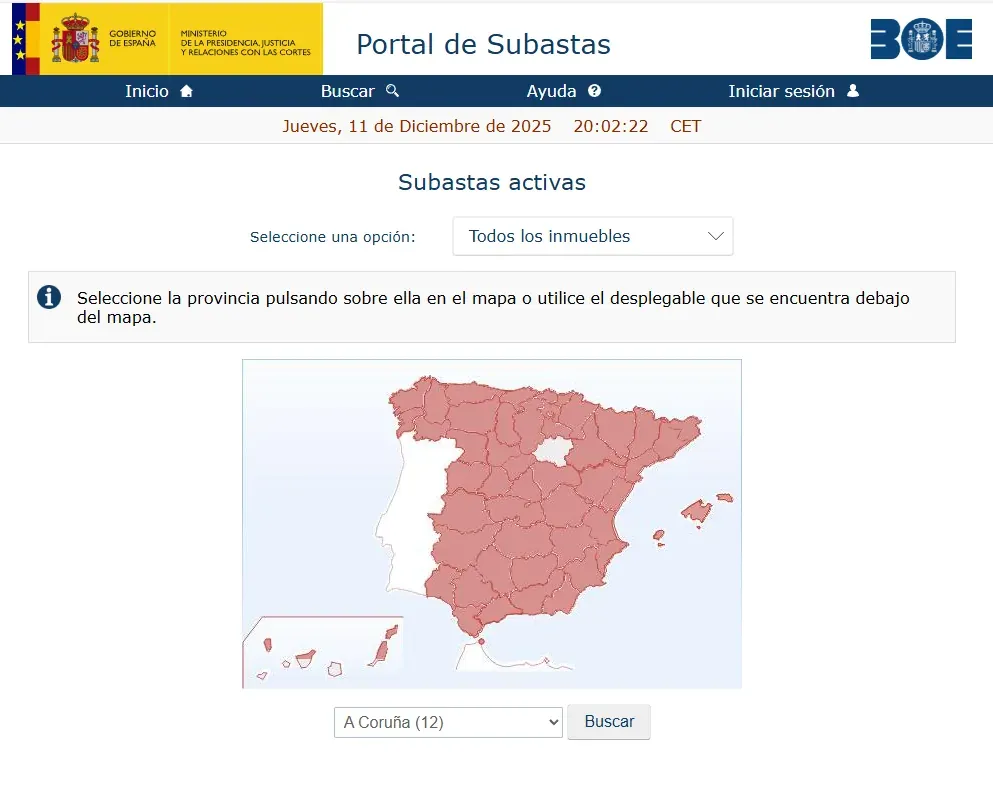
The BOE portal was created to centralize and digitize public auctions in Spain.
It does not run the auctions itself—it provides the platform used by courts and the tax authority to sell seized assets.
Important: The BOE is not the only auction portal in Spain
Many beginners believe that if a property is not listed on the BOE, it doesn’t exist. This is incorrect.
Other official platforms operate in parallel and offer additional opportunities:
- Social Security auctions: Independent platform for assets seized due to unpaid contributions.
- Procurators portal: Handles certain judicial and extrajudicial sales.
To fully understand the auction property market in Spain, you need to look beyond the BOE.
How to access the BOE auction portal
To participate in a property auction in Spain, you need:
- Digital certificate or electronic ID: Required to place bids
- User registration: Mandatory and free on the official website
The deposit requirement
Before bidding, you must place a deposit—usually 5% of the appraisal value.
This ensures serious participation:
- If you win, it is deducted from the final price
- If you lose, it is refunded automatically
How a BOE auction works (step by step)
1. Listing phase
The property is published with basic information and legal conditions. No bids yet—this is when investors analyze the opportunity.
2. Bidding phase
The auction opens for 20 days. Bids are submitted online, and participants remain anonymous.
3. Closing phase
If a bid is placed in the final minutes, the auction is automatically extended to prevent last-second sniping.
The limitation of official auction portals
Platforms like the BOE provide transparency—but only raw data.
They do not provide investment-ready insights.
- No information about occupancy or property condition
- No real market valuation
- Legal documents are complex and difficult to interpret
The missing layer: data and analysis
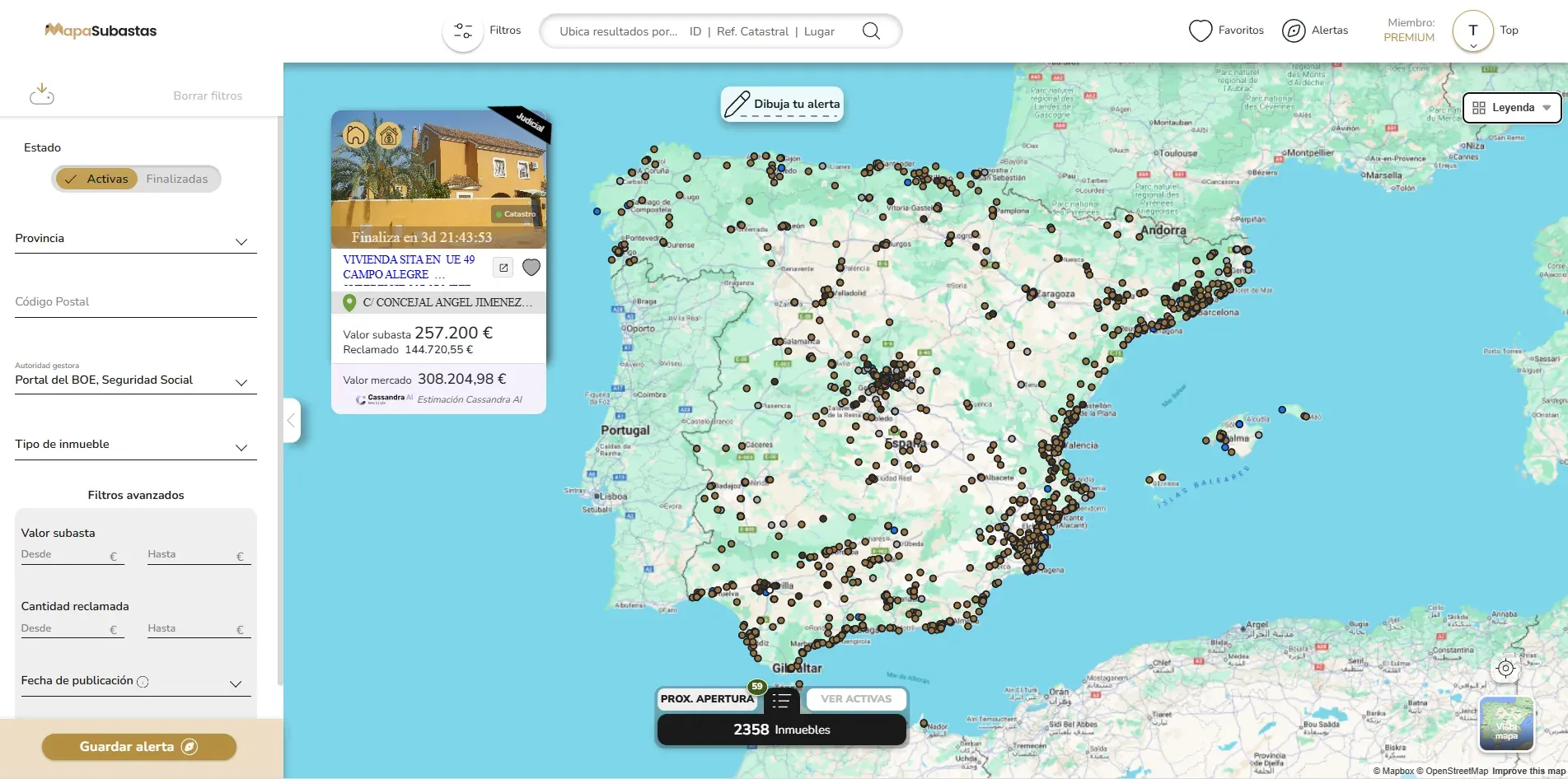
At MapaSubastas, we aggregate data from multiple sources, combine it with cadastral information, and map it visually to help you find real opportunities.
The BOE is the engine—but you need the right tools to navigate it effectively.